
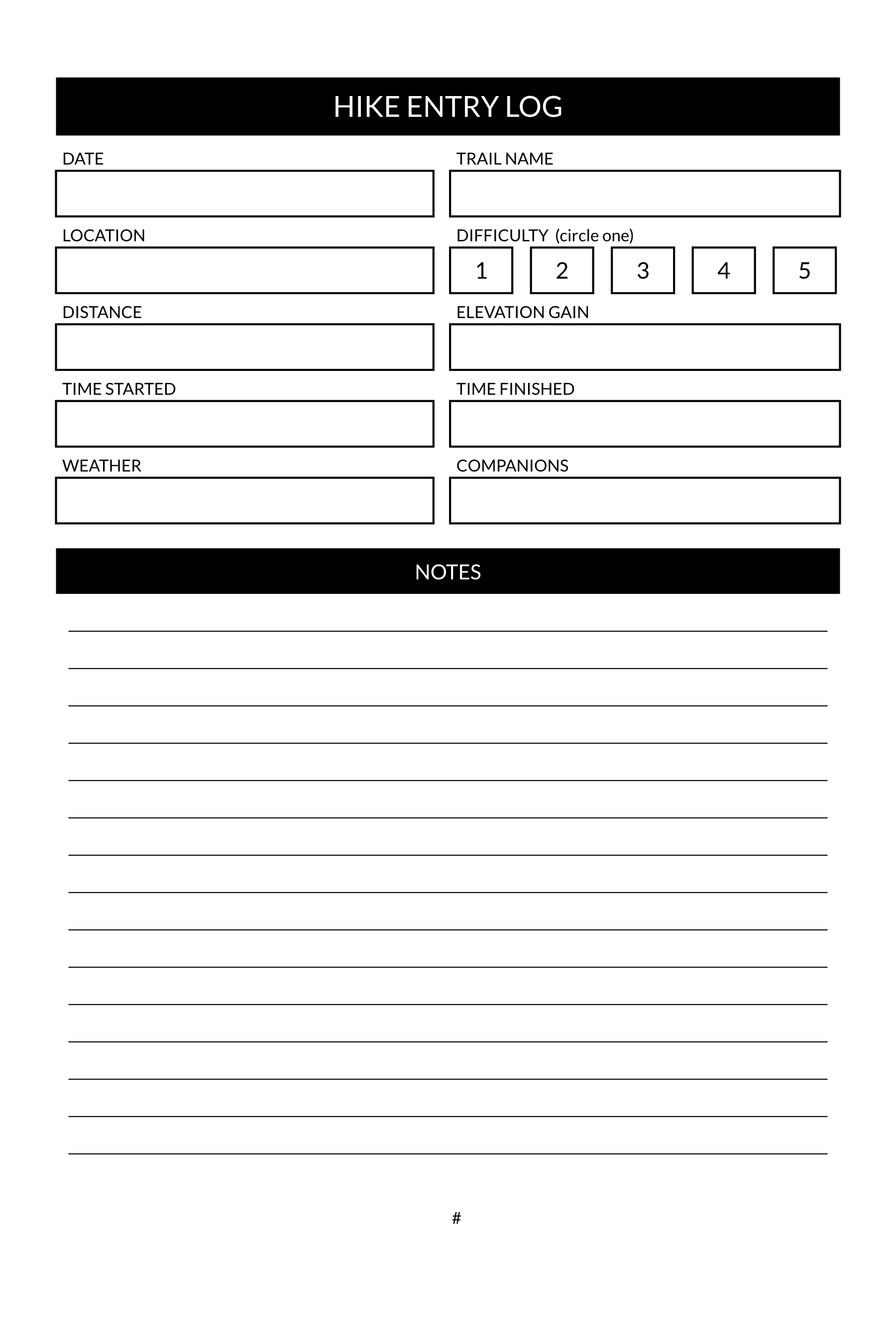
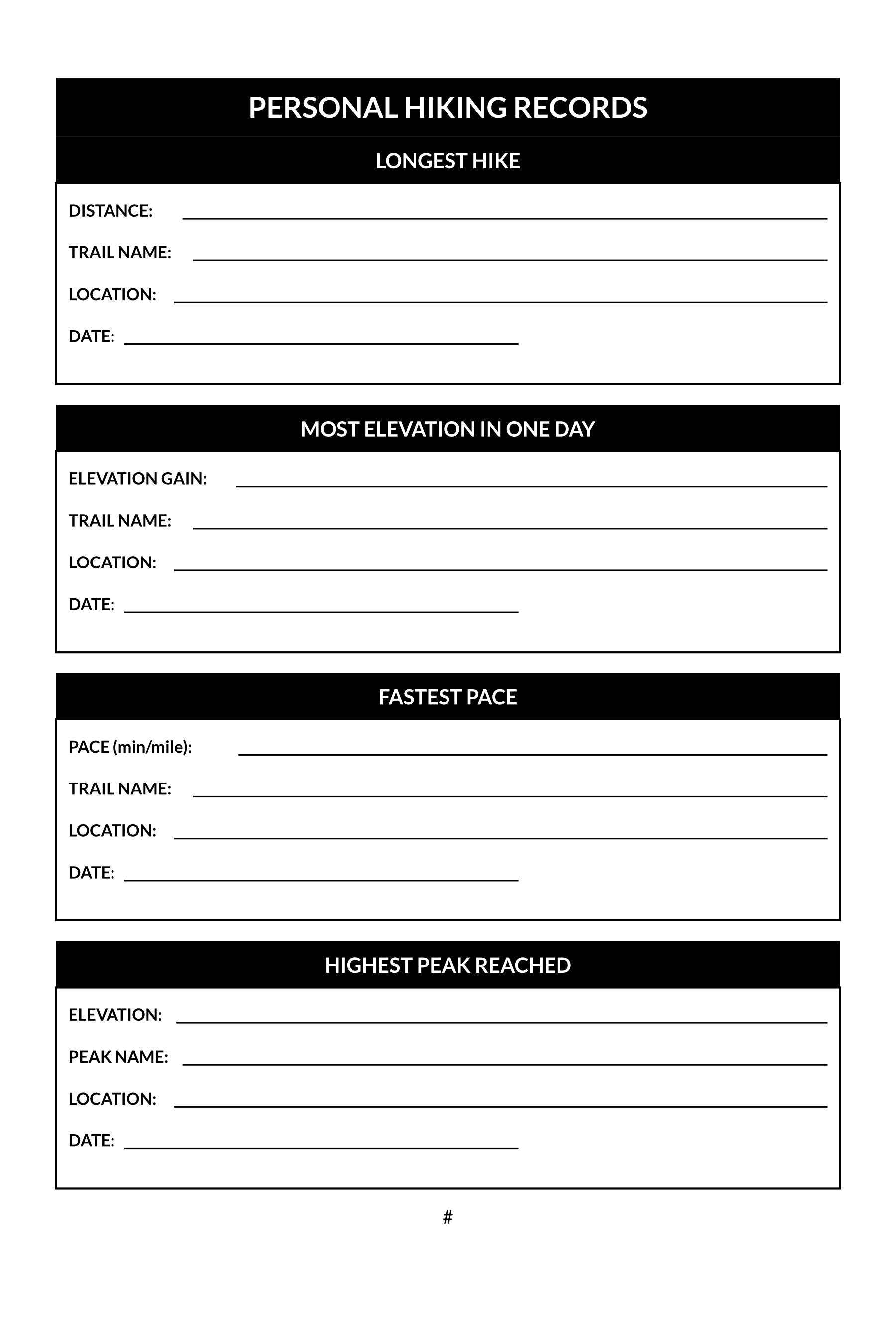
Four dedicated page types cover every aspect of the hike. Hike entry log pages capture trail name, location, distance, elevation gain, start and finish times, weather, difficulty, and companions. Monthly hike tracker grids display 31 rows of cumulative trail data. Personal records pages lock in top milestones. Year-end totals pages summarize the full season in one view.
Standard hiking journals are built for experienced adult trekkers — dense layouts with terminology and tracking formats that feel foreign to younger hikers. The Hiking Adventure Log Book uses a clean, accessible field structure designed specifically for teens and young adults building their outdoor habits, with a record that grows with them season after season.
This journal is built for teen and young adult hikers — ages 13 to 25 — who hike recreationally, with family, or through youth programs and want a dedicated trail record. It is also a strong gift purchase for parents and grandparents shopping for a young outdoor enthusiast who needs structure beyond a blank notebook.
Log every hike's key stats — trail name, distance, elevation, time, and difficulty — on one self-contained entry page.

The 31-row monthly hike tracker grid captures a full month of trail data so progress is always visible at a glance.

Personal records and year-end totals pages lock in your biggest milestones — longest hike, highest summit, and full-season stats.
Welcome to your Hiking Adventure Log Book — your personal record of every trail you tackle, every summit you reach, and every outdoor memory worth keeping. Whether you are a weekend day hiker or someone who spends every free moment on the trail, this journal was designed to grow with you over time into a complete record of your hiking life.
Each Hike Entry Log page covers a single hike from start to finish. Begin by recording the date, trail name, and location at the top. Log your distance and elevation gain, your start and finish times, the weather conditions, and who joined you on the trail. Use the difficulty rating (1 being the easiest and 5 the most challenging) to mark how the hike felt on the day you did it — your rating may change as you get stronger. The notes section at the bottom of each page is yours to fill however you like: describe a view, note a wildlife sighting, jot down gear you wished you had brought, or capture a moment you want to remember.
The Monthly Hike Tracker grid appears at the back of the journal. Each page holds a full 31-row grid so you can log every hike in a given month by date, trail name, miles, and elevation. Use these pages to spot patterns — your most active months, your biggest mileage weeks, and how your numbers grow over time.
The Personal Hiking Records page is for your all-time bests. Update it whenever you beat a record. Longest hike, most elevation gained in a single day, fastest pace, and highest peak reached are the four benchmarks here. Fill them in lightly at first — you will be updating them as you push further.
The Year-End Totals Summary page closes out each year with four simple tallies: total hikes completed, total miles covered, total elevation gained, and total hours on trail. Fill it in at the end of December as a celebration of everything you accomplished on the trails that year.
Start with your very next hike. Write it all down. Come back and read it a year from now — you will be glad you did.
