
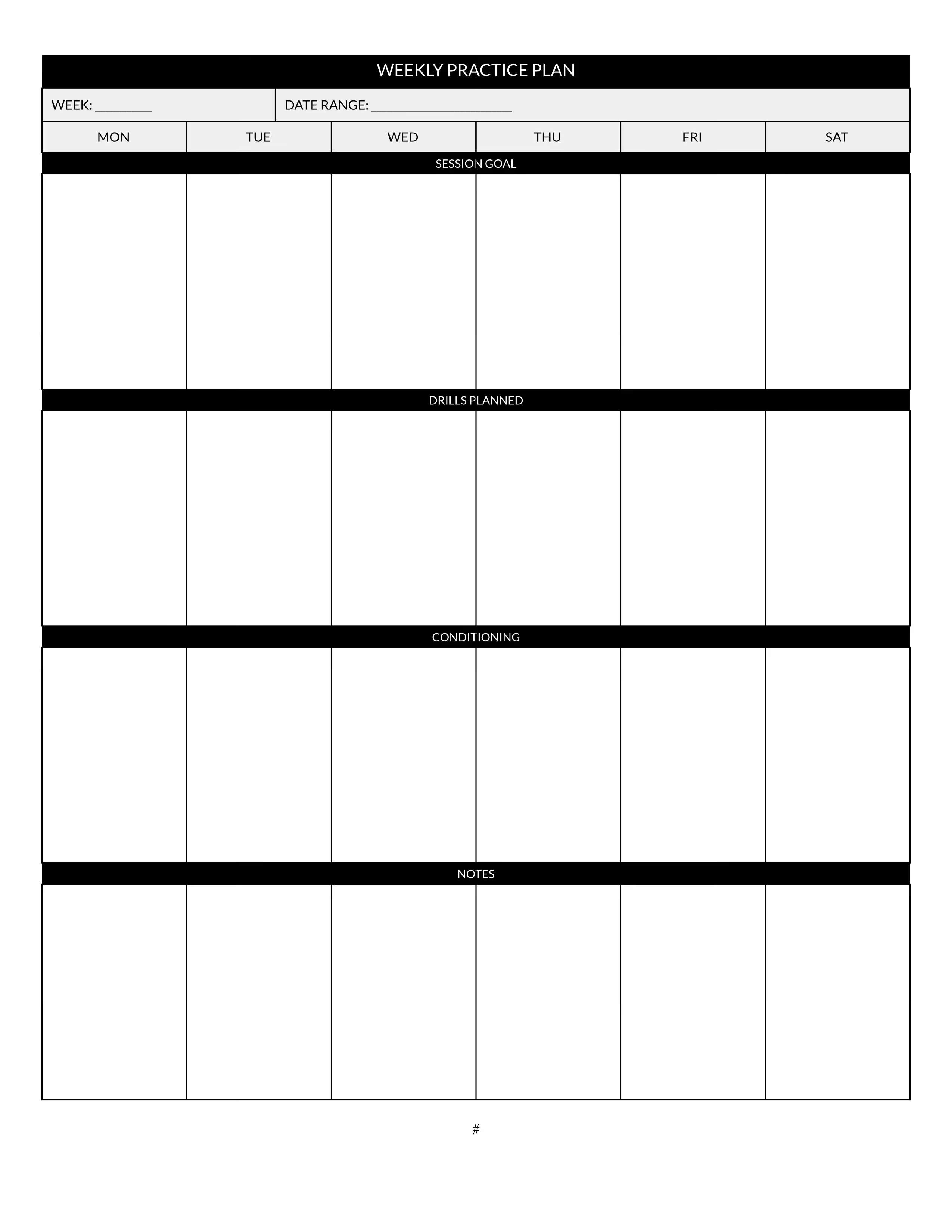
Plan your entire week using the 6-day grid. Record session goals, planned drills, and conditioning work for every practice .
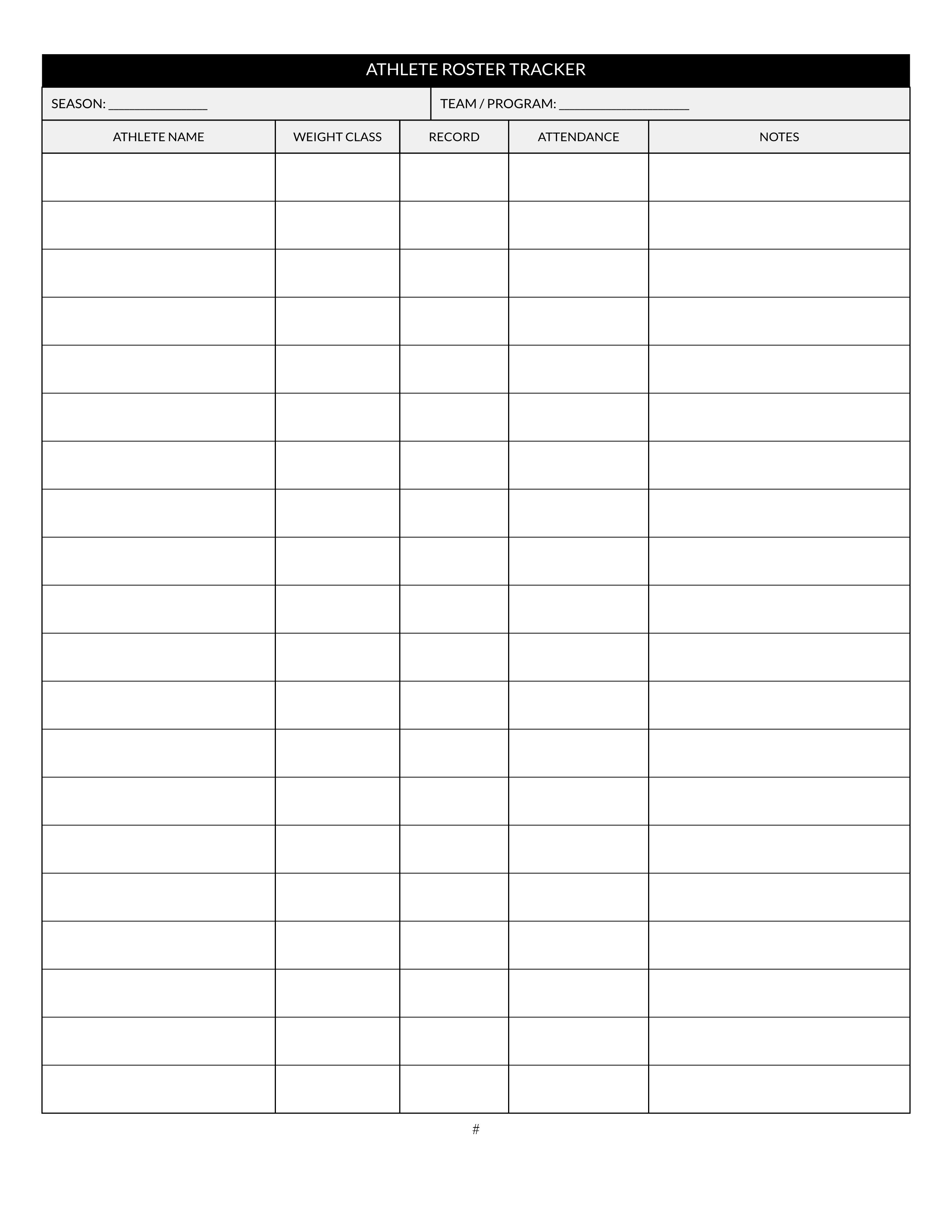
The athlete tracking grid allows you to monitor weight classes, attendance, and seasonal records for up to 20 athletes per page .
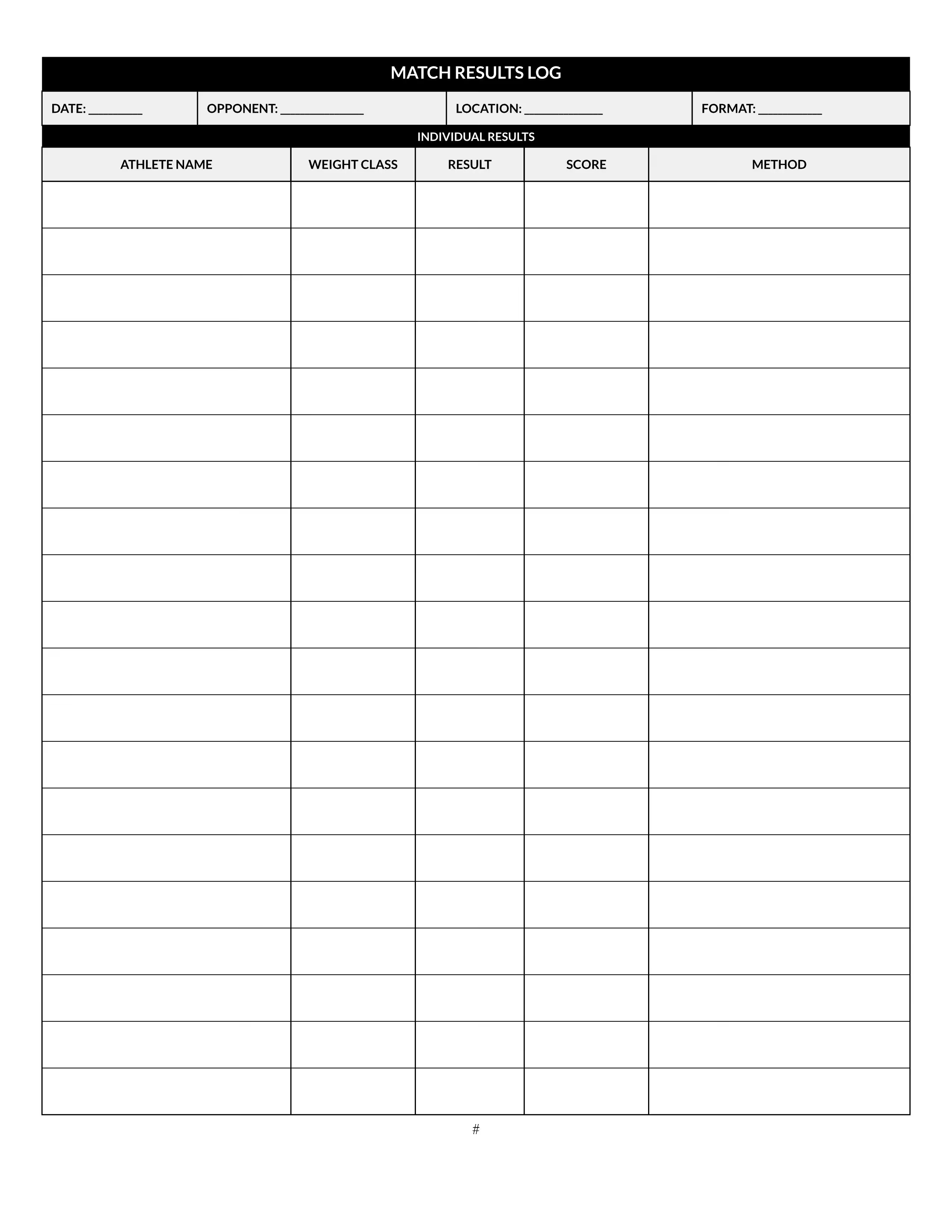
Keep a complete record of every match, including opponent, location, and individual athlete results with method of victory .
Match results log page with tables for athlete names, scores, and methods .
Weekly practice plan page featuring 6-day grids for goals and drills .
Athlete roster tracking grid for managing weight and attendance records.

This planner is organized into four sections that a wrestling coach will use throughout the season — roster tracking, weekly practice planning, match records, and open notes. Each section has enough pages to carry you through a full competitive season and beyond.
Begin with the Athlete Roster Tracker pages at the front. Each page holds 20 athletes with columns for name, weight class, current season record, attendance, and notes. Use these pages to maintain a running record of your full roster across the season. Update attendance after each practice and notes whenever an athlete's status, eligibility, or weight changes. With 10 roster pages, you have room to track up to 200 athlete entries, which gives you space to manage multiple weight class groups or log changes across the season.
The Weekly Practice Plan pages are the heart of the book. Each page covers one full week with columns for Monday through Saturday. For each practice day, you have four rows to plan: the Session Goal for that day, the specific Drills Planned, the Conditioning work you have designed, and any additional Notes. Fill these in before each week starts so your staff and athletes have a clear structure to execute. These 52 pages give you a full year of weekly planning space.
Use the Match Results Log whenever your team competes. Each page records the match date, opponent, location, and format at the top, then gives you 20 rows for individual athlete results — capturing their name, weight class, win or loss, score, and how the match ended (decision, fall, technical fall, forfeit, etc.). These 45 pages give you space to document a full season of dual meets, tournaments, and scrimmages in one organized record.
The Notes pages are available for everything else — team strategy notes, seasonal goals, athlete development observations, parent or administration communication records, or planning notes for the off-season. With 38 notes pages, you have plenty of room to write freely without running out of space.