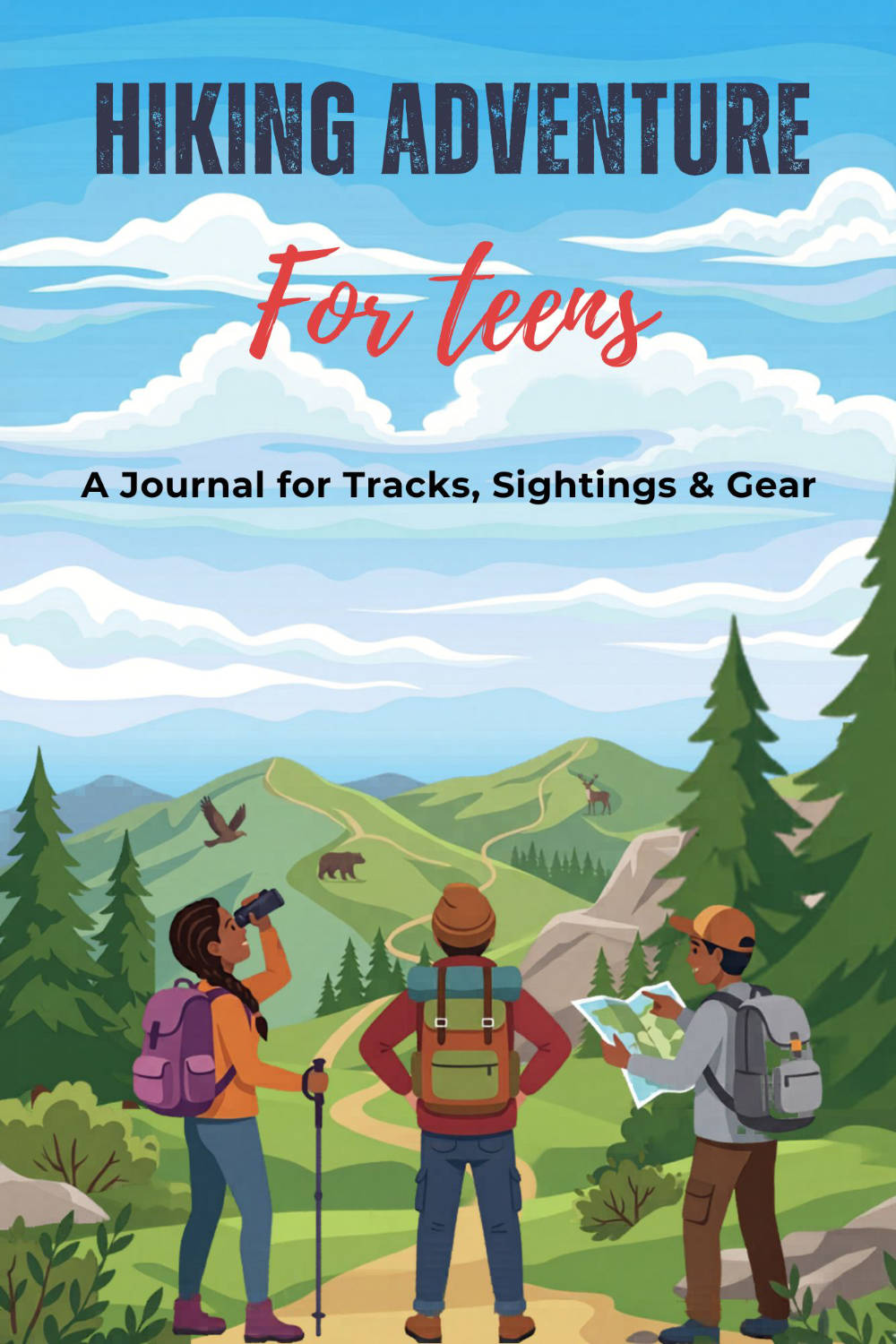
Four page types make hiking feel like an expedition. Hike entry pages use a teen-friendly field layout — trail, park, distance, time, weather, companions, cool things I saw, and difficulty. Wildlife sighting checklist pages turn encounters into a check-off game. Gear checklist pages keep every essential item accounted for before departure. Season totals pages preserve total hikes, total miles, best hike, and most wildlife spotted for every season.
Adult trail logs use field structures and terminology designed for experienced hikers — not for a 14-year-old on their third trail. The Hiking Adventure Log Book for Teens uses large, clear labels, accessible language, and a wildlife checklist format that makes the journaling feel like part of the adventure rather than a chore to fill out after the fact.
This journal is built for teens and tweens ages 10 to 17 who hike with family, youth groups, or summer camps and want a dedicated outdoor record of their own. It is also a strong gift purchase for parents, grandparents, and camp counselors shopping for a young hiker who is ready for their first serious trail journal.
Each hike entry page uses a clear, teen-friendly layout — trail name, park, distance, time, weather, companions, difficulty, and cool things I saw — all in one easy-to-fill format.

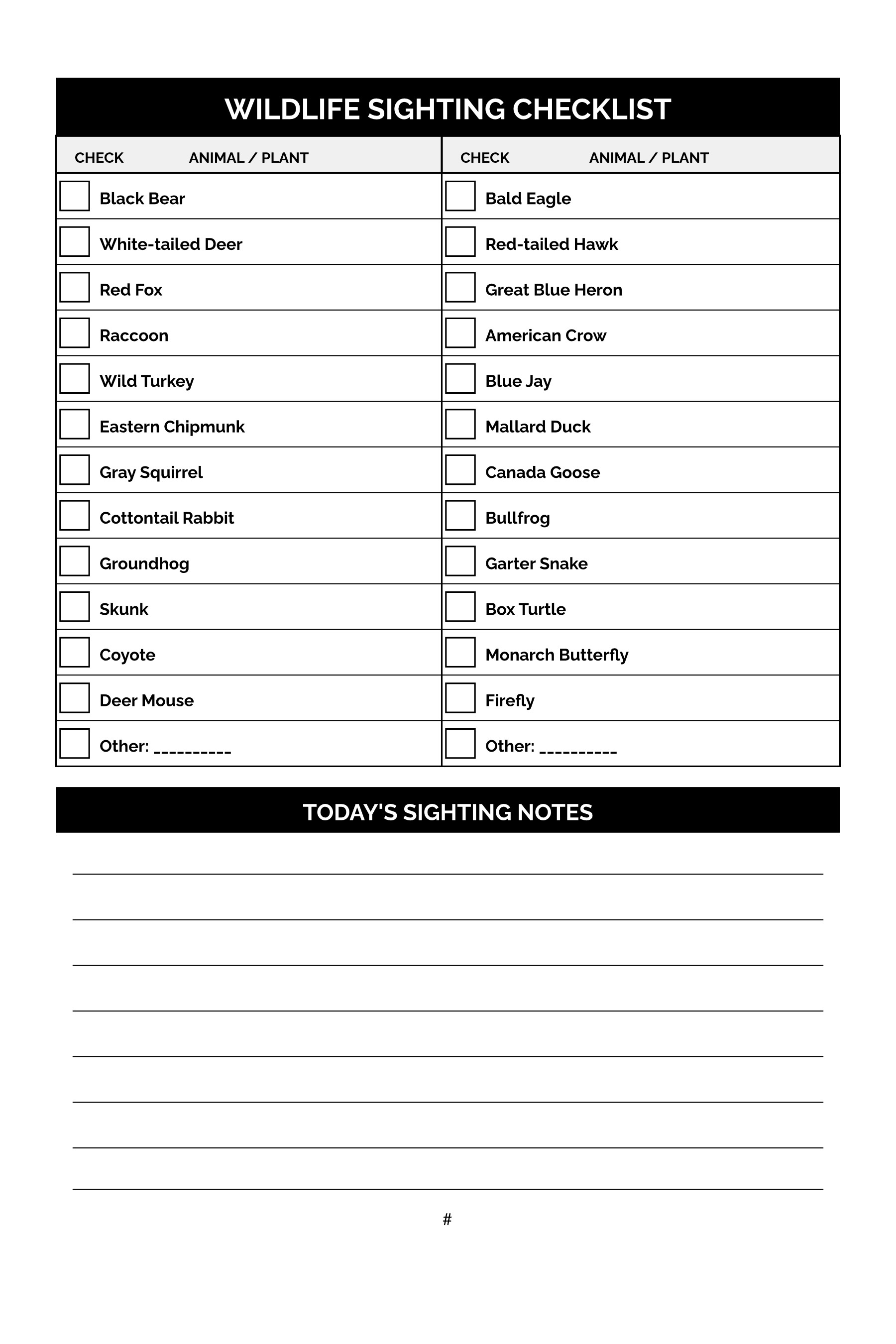
The wildlife sighting checklist turns every trail into a species-spotting game — check off each animal, bird, or plant encountered on the hike.
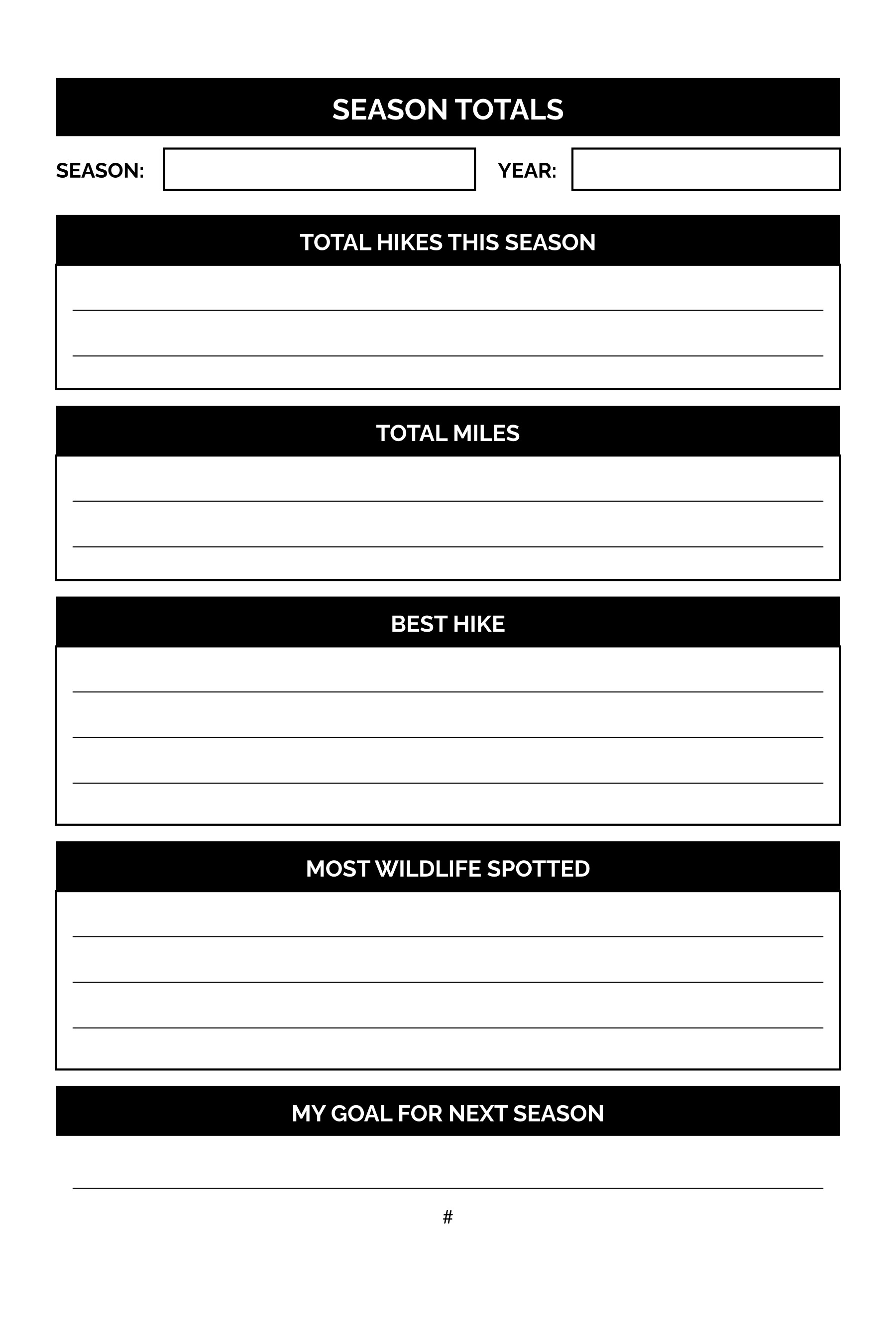
Season totals pages preserve the big seasonal numbers — total hikes, total miles, best hike, and most wildlife spotted — at the close of every hiking season.
The gear checklist page keeps every essential hiking item accounted for before departure so nothing gets left behind on the trail.

This is your outdoor adventure journal — a place to record every hike,
every animal you spot, every trail you conquer, and every season you
spend in the wild. It belongs to you. Fill it in however you want.
HIKE ENTRY LOG (Pages 5-88)
Every time you go on a hike, flip to the next blank entry page and
start filling it in. Write the date, the trail name, and the park or
area where you hiked. Add how far you went and how long it took.
Note the weather — sunny and hot, cloudy and cool, muddy from the
rain, whatever it was. Write down anyone who came with you, and circle
the difficulty number that best describes how tough the hike felt (1
for easy, 5 for incredibly hard). Then use the big "COOL THINGS I SAW"
section to write about everything interesting you noticed on the
trail: animals, plants, views, weird rocks, cool bridges, anything at
all. The more detail you put in, the better this journal gets over time.
WILDLIFE SIGHTING CHECKLIST (Pages 89-92)
Use the wildlife checklist to track every animal and creature you spot.
Each page has two columns of common wildlife with a checkbox next to
each one — check the box when you see that animal in the wild. Keep
an eye out for the ones you have not checked off yet. If you spot
something that is not on the list, write it in the "Other" row at
the bottom of each column. At the bottom of each checklist page,
use the "Today's Sighting Notes" section to write details about a
particularly exciting animal encounter.
GEAR CHECKLIST (Pages 93-96)
Before every hike, run through your gear checklist. Find the trail
name and date fields at the top, fill those in, then go down the list
and check the "PACKED" box for each item you have loaded in your pack.
Use the "CONDITION" column to note anything that needs attention —
a headlamp with low batteries, boots with worn soles, a water bottle
that leaks. Keeping your gear in good shape is part of being a smart
hiker.
SEASON TOTALS (Pages 97-98)
At the end of each hiking season, fill in the season totals page.
Count up your total hikes and total miles, then write about your
best hike of the season and the most amazing piece of wildlife you
spotted. Finally, set your goal for next season — more miles, a
harder trail, a new park. Writing it down makes it more likely to
happen.