Every weekly spread features four large boxes for your goals, tasks, notes, and reflections. This clean, rounded-corner layout makes your priorities pop off the page.
Master your day by focusing on your top 3 priorities. The daily list layout ensures you tackle your most impactful tasks before moving to supporting work.
Real change happens through repetition. Use the monthly grid to track up to six habits, providing the visual accountability you need to reach your long-term goals.
Daily priority list featuring top 3 and supporting task boxes.

Weekly spreads with dedicated boxes for goals, tasks, and reflections.

Monthly intention and review spreads for high-level focus.

Habit tracker grid for monitoring up to six daily habits.

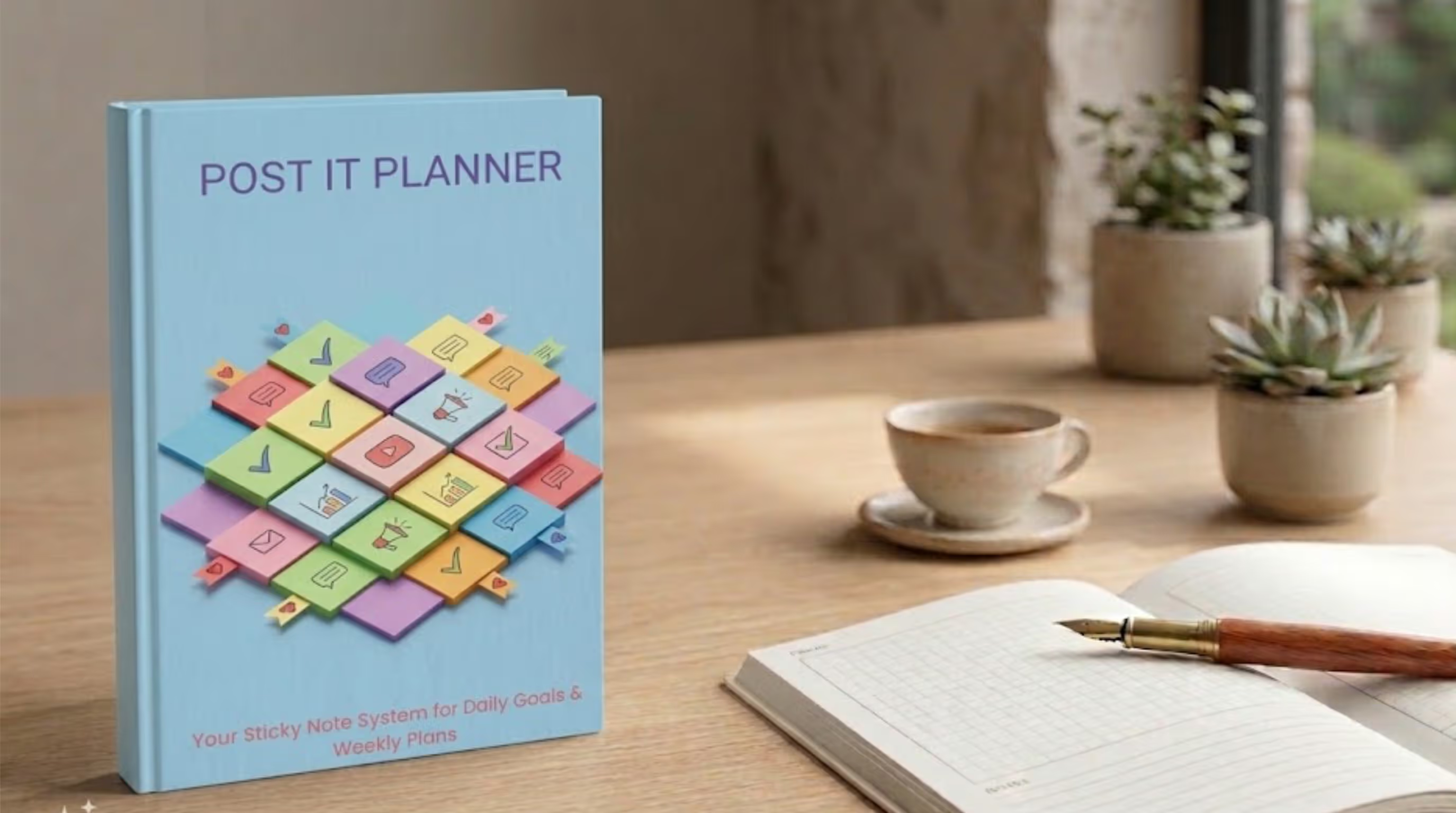
Welcome to the Post It Planner — a five-month productivity journal built around the sticky note method, designed for visual planners who think in short bursts, love the satisfaction of a completed task, and want a structured daily and weekly system that mirrors the tactile energy of a sticky note planning board. Everything in this planner is organized into defined, contained writing spaces that give you focus without rigidity.
Each month begins with a Monthly Intention page. Before you open your first weekly spread, use this page to name the month's direction. Write your intention for the month in your own words — not a goal list, just the spirit of how you want to show up. Then identify your three focus areas: the domains of your life or work that deserve the most energy this month. Below that, write out your four key goals and choose a single word to anchor the month. The mood and energy field is a simple reminder that how you feel going into a month shapes everything you do inside it. Come back to this page whenever you feel scattered or off track.
The Habit Tracker follows immediately after your monthly intention. With thirty-one rows and six habit columns, this is your daily accountability grid for the entire month. Write your six chosen habits in the header row at the top — keep them specific and achievable — then mark each day as you complete them. There is no color coding required. A simple mark or checkmark in each cell is all you need. Reviewing this grid at the end of each week takes thirty seconds and tells you everything about where your consistency actually stands.
After the habit tracker, each month is organized into four weekly blocks. Every block opens with a Weekly Spread — a single page divided into four large rounded boxes styled after sticky notes: Goals, Tasks, Notes, and Reflection. Fill this page in at the start of each week. Your goals box holds what you most want to accomplish. Your tasks box is a working list you add to throughout the week. Notes is for anything that does not fit a category — ideas, reminders, things to research. Reflection is where you write at the end of the week, honestly and briefly, about what happened.
Five Daily Priority List pages follow each weekly spread, one for each weekday. Each page opens with a date and day strip, then gives you three large priority boxes — Top Priority 1, 2, and 3 — with lined space inside each one. These are your three non-negotiable for the day. If you complete nothing else, completing these three things means the day was productive. Below the priority boxes, a supporting tasks section gives you eight checkbox rows for smaller tasks, errands, and follow-ups that matter but do not rise to priority level. At the bottom, an end-of-day reflection space gives you a moment to close the day with intention — one or two lines about what went well, what to carry forward, and what to release.
Each month closes with a two-page Monthly Focus and Review spread. Use the first page at the end of the month to review your wins, name your challenges honestly, and assess how your habits held up. Use the second page to look forward — write your focus for next month before you open a new monthly intention page. This closing and opening ritual is what turns five months of daily tracking into five months of real, measurable growth.
Four additional notes pages and a final lined section round out the planner for overflow thinking, brainstorming, and any planning that does not fit inside a single day or week.
One month at a time. Three priorities a day.